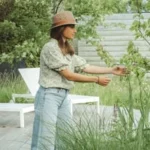
Rebecca Pomerantz
“Nature has been a big part of my life ever since I was a baby—from the mountains in Switzerland to the hills in South Limburg. I’d go to the woods with my father as often as I could to look for mushrooms. And I’d follow my mother out into the garden.”
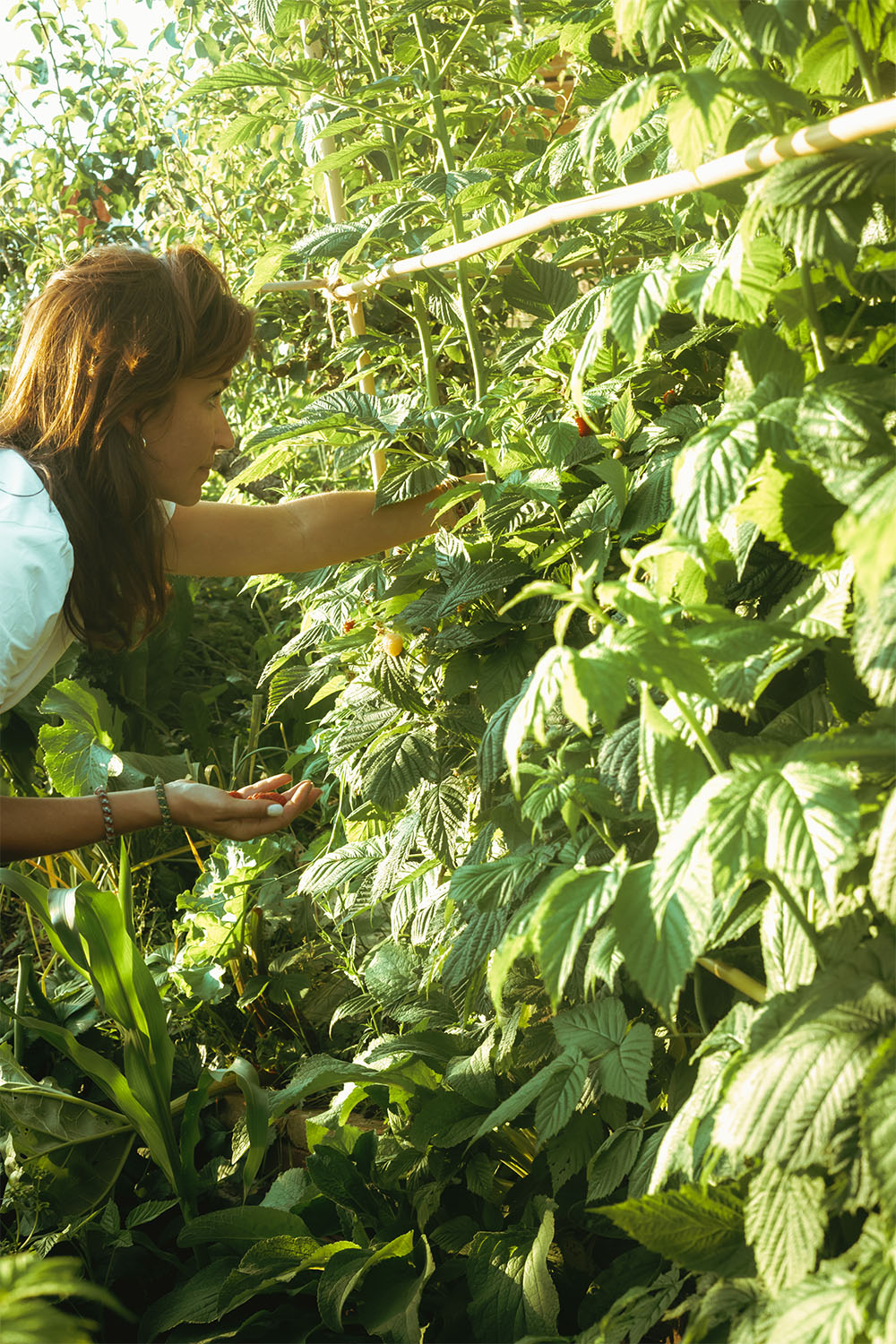
The Paradise Garden actually began during my childhood. My mother loved nothing more than to have her hands in the soil, and my father would take me into the woods. My mother taught me about plants, and even as a little girl, I was given my own little patch of garden to design and tend myself. My father taught me just how much there is to discover—and to eat—in the woods. And growing up in South Limburg, nature was never far away.
Still, I initially chose a completely different path. I studied law and worked in the business world for several years. But my love for gardens remained. Eventually, I went back to school to study garden design and also took a course in permaculture.*
That combination still forms the basis of my design philosophy. I want to create gardens that are beautiful to look at and pleasant to live in, but that also contribute to their surroundings. Places where insects, birds, and other animals can find a home. Places where there is something to pick and taste. And places where the garden isn’t separate from the surrounding landscape, but rather becomes part of it.
That’s why, when I design, I look closely at how nature itself works—at shapes, lines, changes in elevation, and the plants that naturally belong in a given environment. As a result, you’ll see few hard, straight lines in my designs, but rather natural shapes, a wide variety of plant species, and, whenever possible, a large proportion of native plants.
My approach is not to bend nature to my will, but to work with it. This results not only in a vibrant garden, but also in a garden that grows more beautiful and stronger with each passing year.
*Permaculture comes from “permanent agriculture” and “permanent culture.” It is an approach that involves working with nature as much as possible. For example, by taking into account the soil, water, biodiversity, and natural cycles, you can create a garden that is largely able to maintain its own balance without requiring constant major interventions.
Year of Plant Knowledge
design experience
landscaped gardens
planted plants