
1 sept 2024
3 min leestijd
Jemig, ik kan me niet herinneren dat het ooit zoveel heeft geregend als afgelopen jaar. En dan met name de eerste helft van het jaar. Kranten koppen dan ook dat we in Nederland steeds vaker te maken krijgen met extreme weersomstandigheden: van hevige regenbuien tot droge periodes. Op zich is veel water helemaal niet zo slecht voor je tuin, maar het moet natuurlijk wel kunnen weglopen. En daar kun je relatief makkelijk iets aan doen in de meeste tuinen.
Laten we het hebben over… een wadi.. “Een wat?!” Ja, een wadi, wat letterlijk “vallei” of “rivierbedding” betekent. In de tuin is een wadi een ondiepe wateropvang die tijdelijk regenwater kan opvangen en langzaam laat infiltreren. Het is een simpele, duurzame oplossing voor zowel overstromingen als droogte. Een wadi past perfect in een ecologisch tuinontwerp of een duurzaam tuinontwerp.
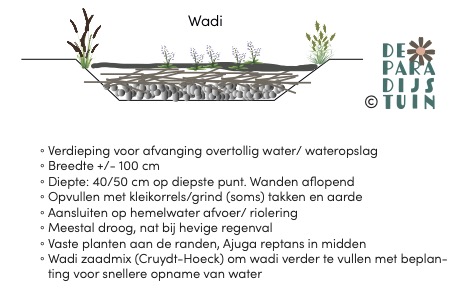
Zo werkt het:
Bij regen stroomt het water naar een ondiepe geul of kom in je tuin. Het water blijft hier tijdelijk staan en kan rustig in de bodem zakken, terwijl het op een natuurlijke manier wordt gefilterd. Het resultaat? Minder overstromingen bij heftige regenbuien en meer grondwaterreserves voor de droge zomers. Met een wadi maak je jouw tuin regen- en droogtebestendig, wat essentieel is in een ecologische tuin.
Zo maak je zelf een wadi:
- Graaf een ondiepe kom of geul: Kies een lager deel van je tuin. Hoe groot de wadi wordt, hangt af van je tuin en je wateropvangdoelen. Een vierkante meter met een diepte van 20 cm buffert al 200 liter water!
- Afvoerpijpje erbij: Leg eventueel een goot van je regenpijp naar de wadi, zodat het water van het dak meteen de wadi in stroomt.
- Check de bodem: Ideaal is zandgrond, waar water snel doorheen kan zakken. Heb je klei of leem? Bedek de bodem dan met geotextiel en vul de wadi met grind, lavasteen of gebakken kleikorrels. Dit helpt het water langzaam te infiltreren.
- Vul met aarde en compost: Bovenop de grindlaag komt een laag teelaarde en compost, zodat je er planten in kunt zetten.
- Plant keuze: Kies planten die van nat en droog houden, zoals wilde bloemen, grassen, of vaste planten. Ik gebruik vaak speciaal Wadizaad voor kleigrond, zoals een mix van Filipendula, Lathyrus en Veronica – planten die zowel tegen plensbuien als zomerse droogte kunnen.
Een Wadi in Actie!
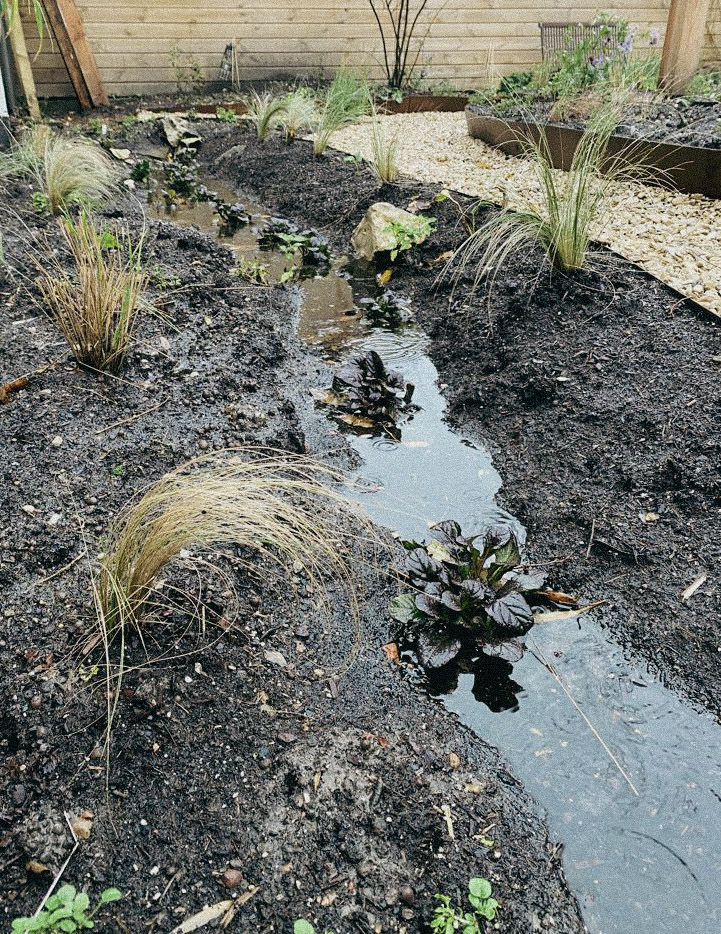
Onlangs heb ik een wadi aangelegd in een stadstuin in hartje Delft. Deze tuin had vaak last van wateroverlast na hevige regenbuien. Dankzij de wadi wordt het regenwater nu opgevangen en gefilterd, waardoor de tuin zelfs tijdens natte seizoenen droog en begaanbaar blijft. En in de zomer? Dan zorgt de wadi ervoor dat de bodem langer vochtig blijft, wat ideaal is voor de planten.
Waarom een wadi perfect is voor jouw tuin
Een wadi past perfect in een ecologisch tuinontwerp of een duurzaam tuinontwerp. Het draagt bij aan:
- Waterbeheer: minder kans op overstromingen en meer grondwateropslag.
- Biodiversiteit: de juiste planten in en rond de wadi trekken insecten, vogels en andere dieren aan.
- Duurzaamheid: een wadi is een natuurlijke oplossing die je tuin mooier én milieuvriendelijker maakt.
Of je nu in Amsterdam, Waterland, of in de rest van Nederland woont, een wadi is een slimme toevoeging aan je tuin. Het maakt niet uit of je een grote of kleine tuin hebt – ik help je graag bij het ontwerpen en aanleggen van een wadi die past bij jouw tuin en grondtype.
Tuinadvies op maat voor een ecologische tuin
Wil jij jouw tuin regen- en droogteproof maken? Als ervaren ecologische tuinarchitect in Noord-Holland ontwerp ik tuinen waarin een wadi naadloos past. Leuk als je me belt om eens te kijken naar de mogelijkheden voor jouw tuin!